Get Your Commercial Roof Back in Shape
A roof problem can start with something as small as a damaged seam, loose flashing, or a puncture around rooftop equipment. Finding the cause and making the right repair can help keep that isolated issue from affecting other parts of the roofing system or the building below.
Great Lakes Roofing provides commercial roof repair for businesses, property managers, facility managers, and building owners throughout Chicago, Northwest Indiana, and surrounding Midwest markets. Since 1989, our team has worked exclusively with commercial roofing, giving us experience with the flat, low-slope, and metal roof systems found on warehouses, manufacturing facilities, retail properties, schools, offices, and other commercial buildings.
Whether you have discovered a leak, noticed visible roof damage, or need repairs identified during an inspection, our team can evaluate the problem and determine the appropriate next step.
The Right Repair Starts with the Right Diagnosis
A water stain inside a building tells you there is a problem, but it does not necessarily tell you where that problem started.
Water can enter through one part of a commercial roofing system and travel along insulation, decking, structural components, or other materials before becoming visible inside. Simply repairing the area directly above an interior leak may fail to address its actual source.
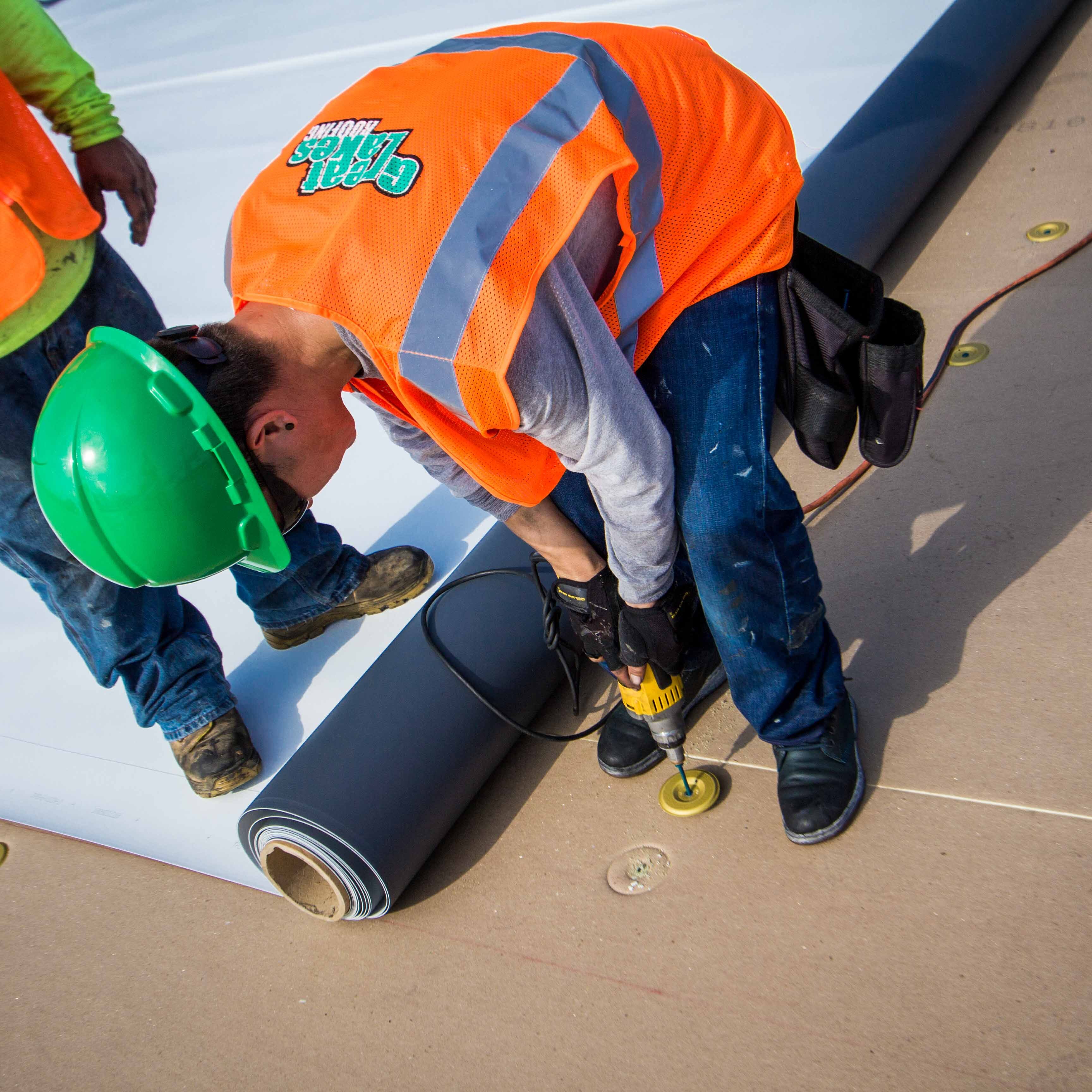
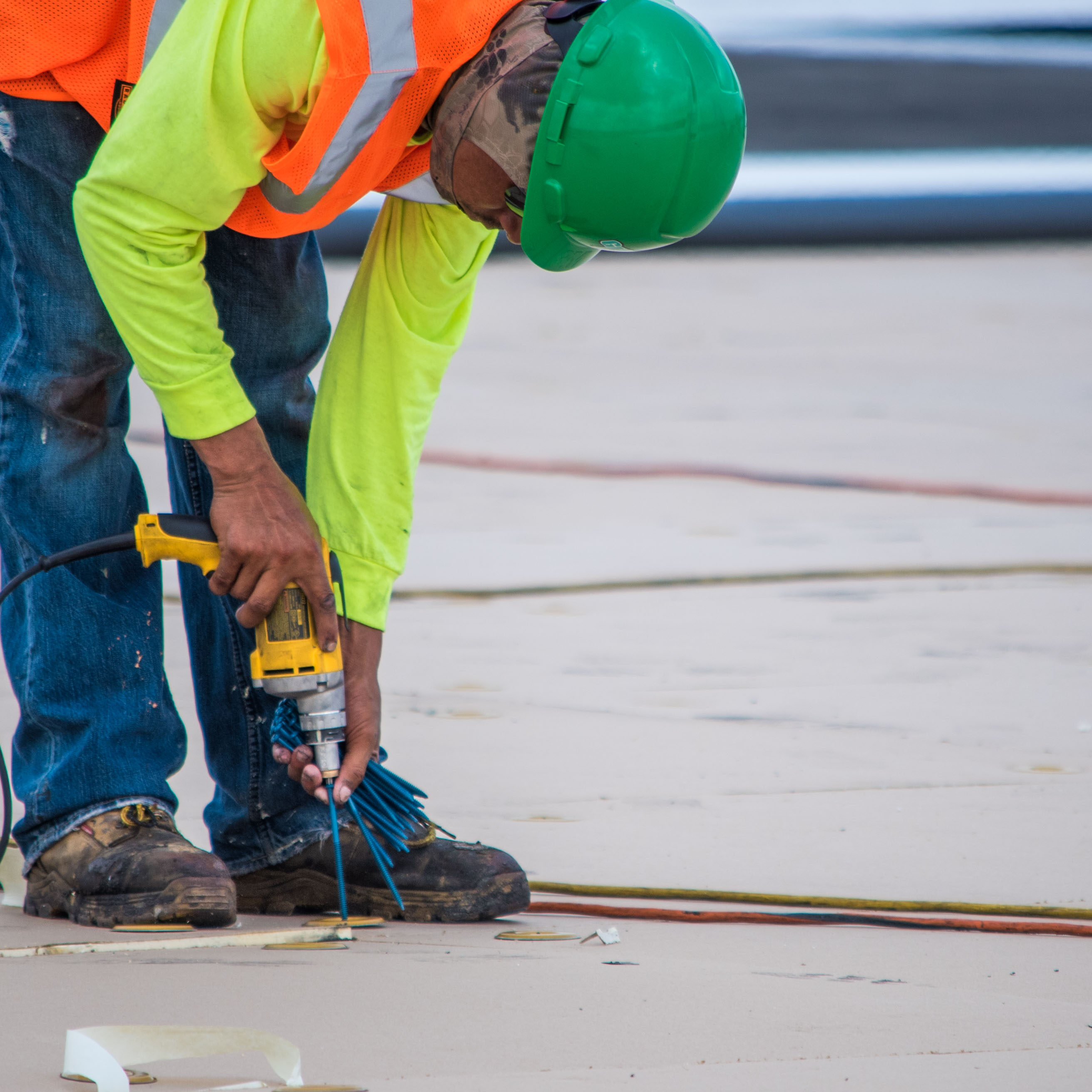
That is why our commercial roof repair process starts with evaluating the condition of the roofing system and identifying what is causing the problem.
Common Repair Needs Include:
- Open or deteriorated seams
- Membrane punctures, cuts, and tears
- Damaged flashing
- Problems around vents, curbs, and roof penetrations
- Damage around rooftop HVAC equipment
- Clogged or poorly functioning drains
- Areas of ponding water
- Loose or damaged metal components
- Deteriorated sealants
- Wind, hail, snow, and ice damage
- Failed or aging previous repairs
Signs Your Commercial Roof May Need Repair
Some roofing problems are obvious. Others develop gradually and may be easy to overlook until water reaches the building interior.
Property and Facility Managers Should Pay Attention To:
- Water stains on ceilings or walls
- Active dripping during rain
- Recurring leaks in the same area
- Standing or ponding water on the roof
- Open seams or gaps in roofing materials
- Loose or deteriorated flashing
- Bubbles or blisters in the roof membrane
- Visible punctures or tears
- Damaged areas around rooftop equipment
- Roof debris blocking drains or gutters
- Changes in roof condition following high winds, hail, snow, or ice
Reduce Unexpected Repairs with Preventative Roof Maintenance
The best time to find a roofing problem is often before water starts entering the building.
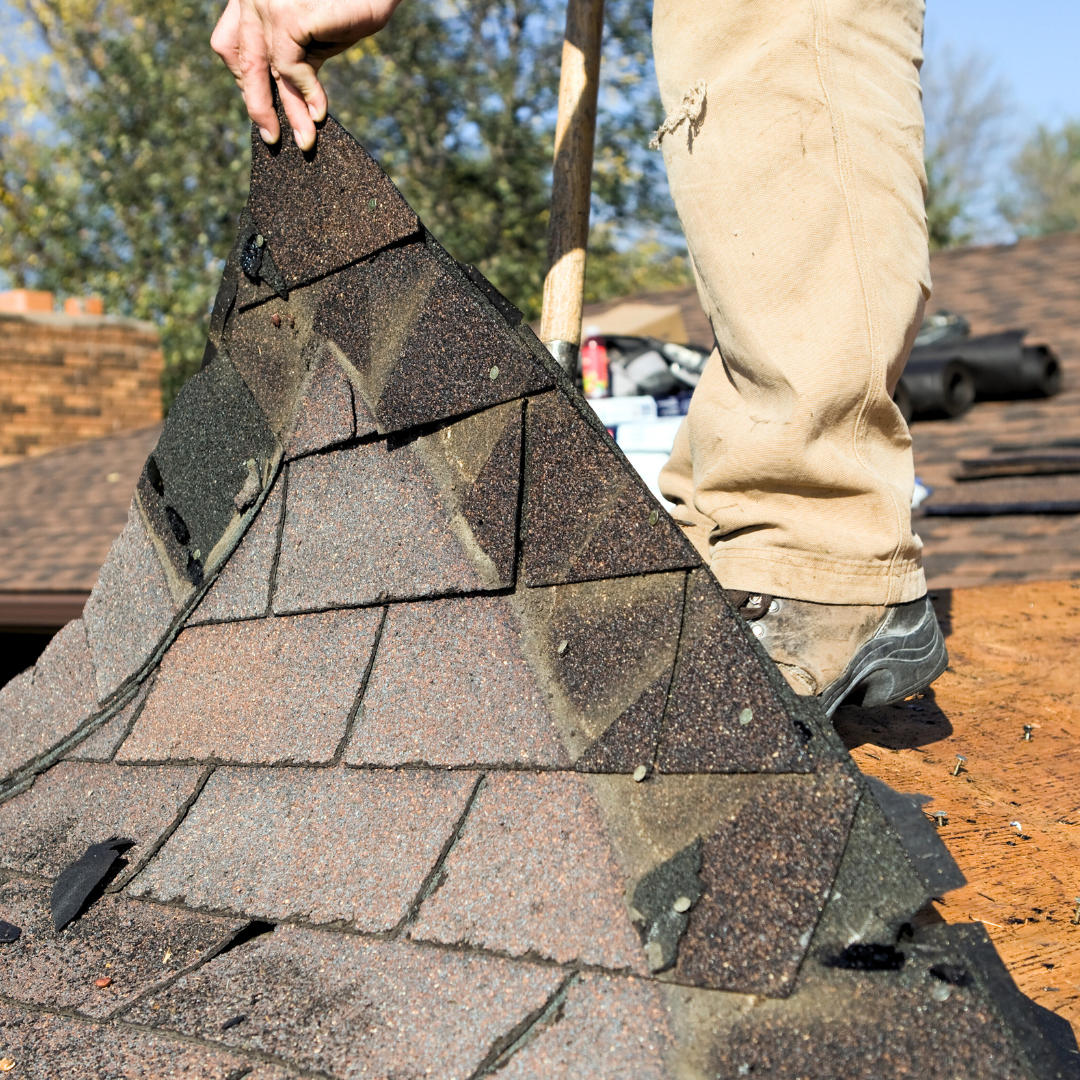
Routine maintenance gives property and facility managers a chance to identify membrane damage, deteriorated flashing, drainage problems, debris, and other concerns while they are still manageable.
Great Lakes Roofing's Preventative Roof Maintenance programs include periodic inspections of the roofing system, flashing, drains or gutters, and other components. Minor repairs can be addressed during maintenance visits, while larger concerns can be documented so building managers have time to plan.
This approach is especially useful for companies managing multiple facilities or large commercial roof areas where an unnoticed problem can become expensive.
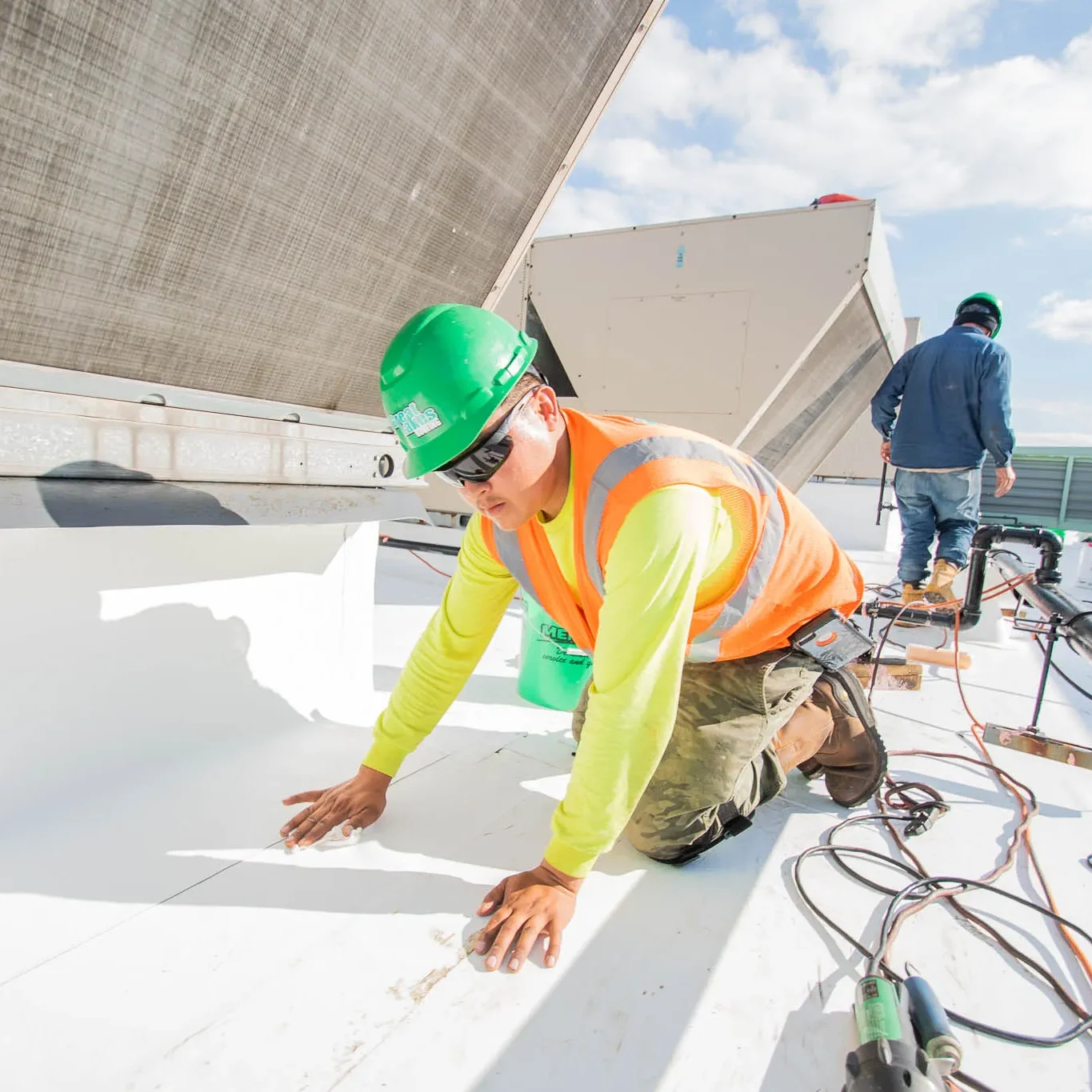
Commercial Roof Repair Across Chicago & the Midwest
Commercial roofs in the Midwest deal with demanding conditions throughout the year. Heavy rain, high winds, snow, ice, freeze-thaw cycles, and large temperature changes can all affect roofing materials over time.
Great Lakes Roofing provides commercial roof repair across its Midwest service area, with a strong presence throughout Chicago and Chicagoland, Northern Illinois, and Northwest Indiana. Our broader service footprint also extends into Wisconsin and Southwest Michigan, including commercial markets around Milwaukee, Waukesha, Kalamazoo, and Battle Creek.

FAQ
Visit our faq's page for more frequently asked questions.