Roofing Expertise From Preconstruction to Closeout
A commercial roof is one part of a much larger construction project. Its success depends on the roofing system itself, but also on proper planning, project sequencing, and getting critical details right before they become harder to change.
Great Lakes Roofing provides new construction roofing for general contractors, developers, construction managers, and building owners throughout Chicago, Northwest Indiana, Northern Illinois, Wisconsin, Southwest Michigan, and surrounding Midwest markets.
Since 1989, our focus has been commercial roofing. We bring that experience to new construction projects ranging from warehouses and manufacturing facilities to schools, retail properties, multi-family buildings, and other large commercial facilities.
Commercial Roofing That Fits the Construction Schedule
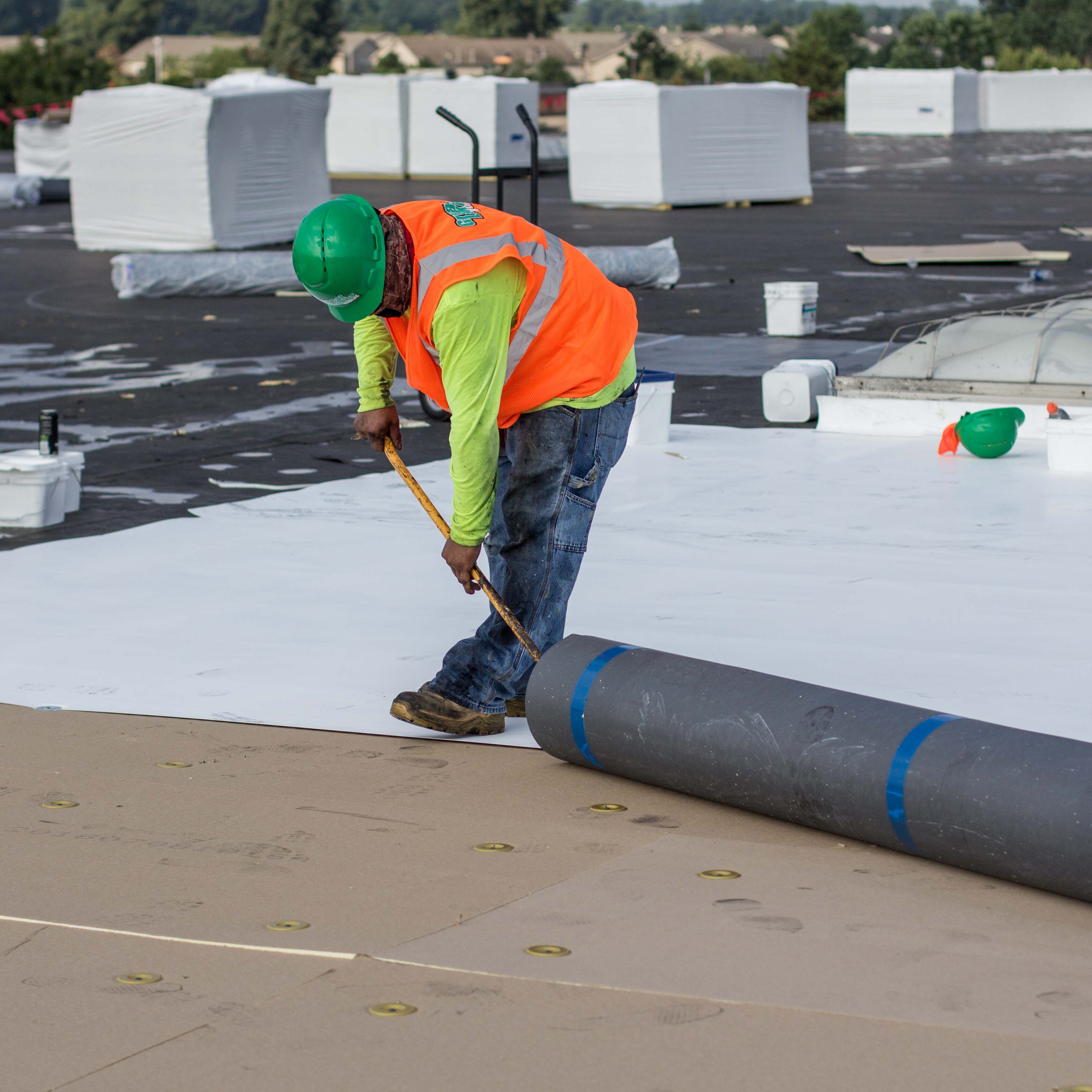
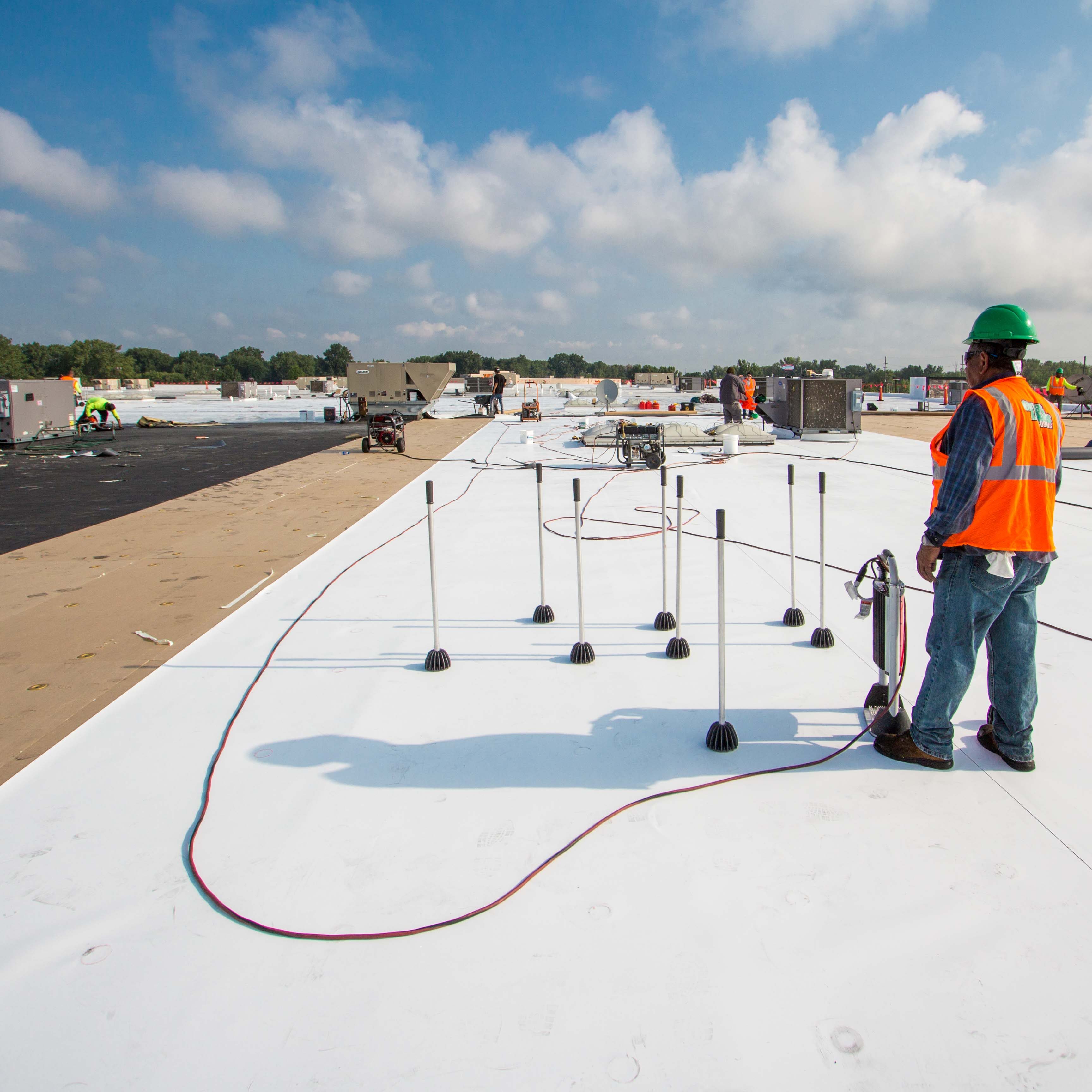
Roof installation needs to happen at the right point in the overall project. Structural progress, rooftop equipment, penetrations, material deliveries, weather, and the work of other trades can all affect when different roof areas are ready.
Great Lakes Roofing works within the larger construction schedule to keep the roofing scope moving. Before installation, our team reviews plans and specifications and works through key project requirements, including:
- Roofing system and assembly requirements
- Insulation and drainage
- HVAC curbs and rooftop equipment
- Plumbing and electrical penetrations
- Roof hatches and access points
- Parapets, edges, and transitions
- Material staging and roof access
- Installation sequencing
Identifying these details before crews reach the affected areas can reduce field changes and unnecessary rework. It also helps general contractors and construction managers understand what needs to happen before each phase of roofing can move forward.
Commercial Roofing Systems for New Construction
The roofing system specified for a new building needs to work with the structure, building use, project requirements, and expected conditions at the property.
Great Lakes Roofing installs a range of commercial roofing systems for new construction projects, including:
- TPO roofing
- EPDM roofing
- Modified bitumen
- Built-up roofing
- PVC roofing
- Cool roofing systems
For projects where the roofing system has not yet been finalized, we can work with the project team to evaluate available options based on the building and project requirements.
New Construction Roofing for Commercial & Institutional Projects
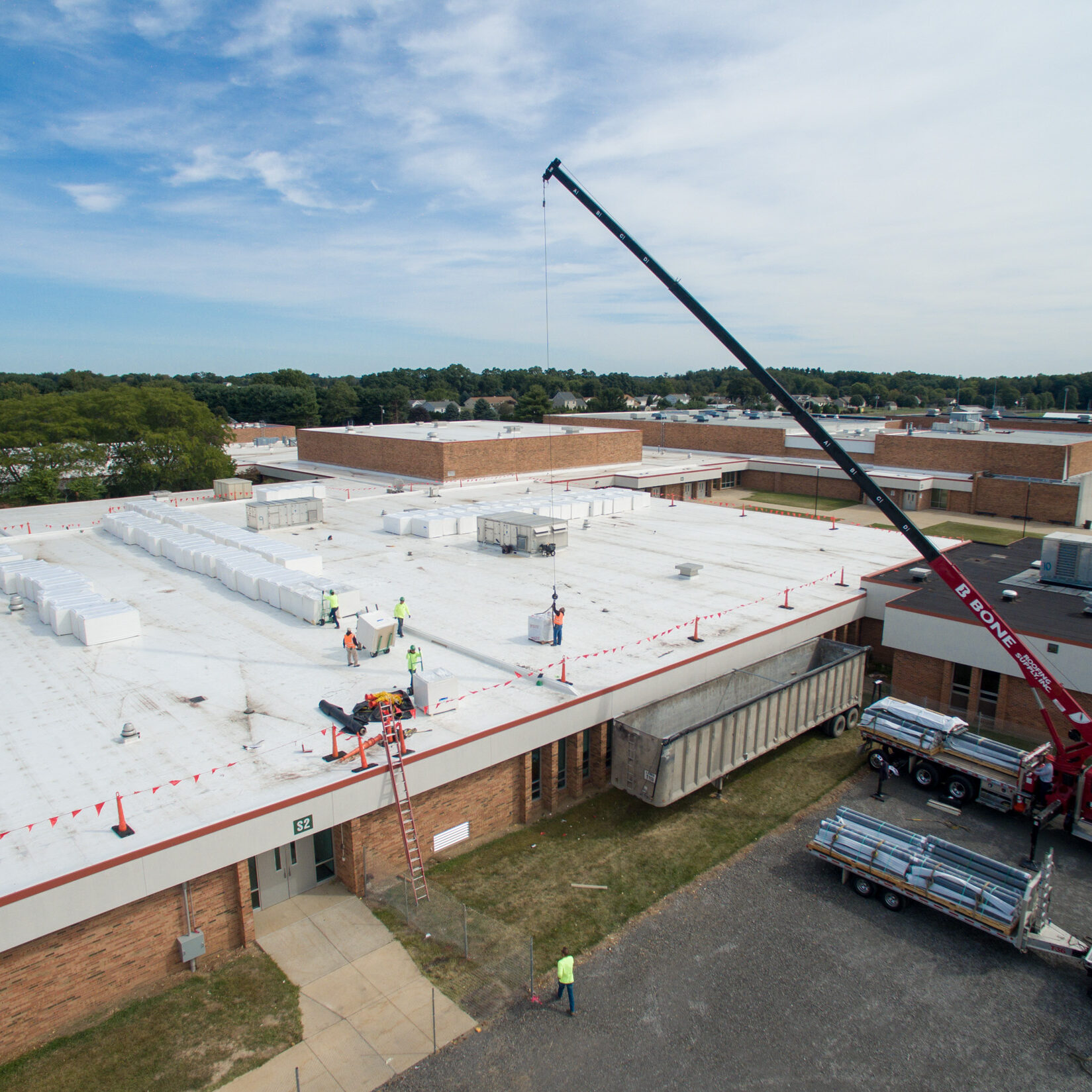
Great Lakes Roofing has experience working across a wide range of commercial and institutional properties.
Our new construction roofing capabilities can support projects such as:
- Warehouses and distribution centers
- Manufacturing and industrial facilities
- Self-storage facilities
- Cold storage buildings
- Data centers
- Healthcare facilities
- Schools and universities
- Municipal buildings
- Retail properties
- Mixed-use developments
- Multi-family properties
Each building type brings different requirements. A manufacturing facility may have extensive rooftop equipment and penetrations, while a distribution center may have an expansive low-slope roof with different drainage and access considerations.
Our commercial experience allows us to approach each project based on the building, specifications, and construction requirements in front of us.
New Construction Roofing Across Chicago & the Midwest
Building in the Midwest means accounting for demanding seasonal conditions during both planning and installation.
Summer heat, heavy rain, high winds, snow, ice, and significant temperature changes can affect project scheduling and material installation. Working with a contractor familiar with these conditions can help project teams plan roofing work around realistic installation windows.
Great Lakes Roofing provides new construction roofing throughout Chicago and Chicagoland, Northern Illinois, Northwest Indiana, Wisconsin, Southwest Michigan, and surrounding markets.
Our commercial focus gives us experience with large roof areas, complex projects, and the conditions common to commercial construction throughout the region.

FAQ
Visit our faq's page for more frequently asked questions.